Hip Replacement Surgeon & Hospital in Jaipur
Hip pain and stiffness can make everyday activities such as walking, climbing stairs, sitting, and sleeping uncomfortable. When hip joint damage becomes severe and non-surgical treatments no longer provide adequate relief, hip replacement surgery may be considered to reduce pain and improve mobility.
At Welton Hospital, Jaipur, patients can consult Dr. Sandeep Yadav, an orthopaedic surgeon with fellowship training in joint replacement surgery, for the evaluation and treatment of hip joint conditions.
If you are looking for a hip replacement surgeon in Jaipur, Dr. Yadav provides consultation for patients with advanced hip arthritis, avascular necrosis, selected hip fractures, and other conditions affecting hip joint function.
Hip Replacement Surgery in Jaipur at Welton Hospital
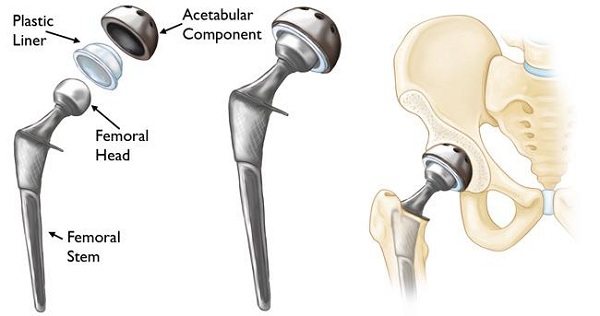
Hip replacement surgery involves replacing damaged parts of the hip joint with artificial components called implants or prostheses. These components are designed to restore smoother joint movement and reduce pain caused by damaged joint surfaces.
Welton Hospital provides orthopaedic surgical care, with facilities including modular operation theatres and physiotherapy and rehabilitation services.
Patients considering hip replacement can receive a clinical assessment, discussion of available treatment options, surgical planning when appropriate, and guidance on postoperative rehabilitation.
Dr. Sandeep Yadav's training includes primary and revision hip replacement surgery, supporting the evaluation of patients who may require joint replacement.
What Is Hip Replacement Surgery?
The hip is a ball-and-socket joint. The rounded head of the thigh bone (femur) fits into a socket in the pelvis called the acetabulum. Smooth cartilage covers the joint surfaces and helps the hip move comfortably.
Conditions such as osteoarthritis, inflammatory arthritis, avascular necrosis, and certain fractures can damage these structures, causing pain, stiffness, and difficulty walking.
During hip replacement surgery, damaged joint surfaces are removed and replaced with artificial components made from suitable combinations of metal, ceramic, and medical-grade polyethylene.
The type of implant and surgical approach depend on the patient's anatomy, bone quality, medical condition, and the surgeon's assessment.
Conditions That May Require Hip Replacement
Hip replacement may be considered for several conditions when symptoms and joint damage justify surgery.
Osteoarthritis of the Hip
Osteoarthritis causes progressive damage to joint cartilage and may result in pain, stiffness, and reduced movement. Hip replacement can be considered when symptoms remain severe despite appropriate non-surgical treatment.
Avascular Necrosis (AVN) of the Hip
Avascular necrosis, also called osteonecrosis, occurs when the blood supply to part of the femoral head is disrupted. Advanced disease may cause collapse of the joint surface and lead to the need for hip replacement.
Earlier stages may be managed using other treatments depending on the extent of damage.
Rheumatoid Arthritis
Inflammatory arthritis can damage the hip joint over time. When medical treatment does not adequately control symptoms and structural damage becomes severe, joint replacement may be considered.
Hip Fractures
Certain displaced hip fractures, particularly in older adults, may require partial or total hip replacement. The choice depends on fracture type, patient health, mobility before injury, and other clinical factors.
Post-Traumatic Arthritis
Previous fractures or injuries involving the hip joint may lead to cartilage damage and arthritis. In selected patients, hip replacement can help manage persistent pain and loss of function.
When Should You Consult a Hip Replacement Surgeon?
Persistent hip pain does not automatically mean that surgery is necessary. However, an orthopaedic evaluation may be helpful if you experience:
- Hip or groin pain that interferes with walking or daily activities
- Stiffness that makes bending, sitting, or climbing stairs difficult
- Pain that continues despite medicines and physiotherapy
- Difficulty sleeping because of hip discomfort
- Reduced walking distance or increasing dependence on support
- Progressive limitation of hip movement
- Significant joint damage identified on imaging
A hip replacement surgeon will assess whether symptoms are caused by the hip joint itself and discuss suitable treatment options.
Seek urgent medical attention if you develop severe hip pain after a fall, cannot bear weight, or notice an obvious deformity. These symptoms may indicate a fracture or another serious injury.
Types of Hip Replacement Surgery
Not every patient requires the same type of operation. The surgical procedure depends on the underlying condition and the structures affected.
Total Hip Replacement (THR)
Total hip replacement involves replacing both the damaged femoral head and the joint surface of the acetabulum with artificial components.
It is commonly considered for advanced hip arthritis, severe avascular necrosis, and selected hip fractures.
Patients searching for a total hip replacement surgeon in Jaipur can consult Dr. Sandeep Yadav at Welton Hospital for an assessment of whether this procedure is appropriate.
Partial Hip Replacement (Hemiarthroplasty)
Partial hip replacement involves replacing the femoral head while retaining the natural hip socket.
It is mainly used for certain hip fractures, particularly in selected older patients. It is not generally the preferred operation for advanced arthritis affecting both joint surfaces.
Revision Hip Replacement
Revision hip replacement is an operation performed to replace or repair components of an existing hip implant.
It may be needed because of implant loosening, wear, recurrent dislocation, infection, fracture around the implant, or other complications.
Revision procedures can be more complex than primary hip replacement and require careful evaluation and surgical planning.
Total Hip Replacement Surgery in Jaipur
Total hip replacement is a commonly performed operation for patients with severe hip joint damage.
The procedure generally involves removing the damaged femoral head, preparing the hip socket, and positioning artificial components to replace the affected joint surfaces.
The implant may be fixed using cemented or cementless techniques, depending on the patient's bone quality and other clinical considerations.
The procedure is performed under appropriate anaesthesia, and the surgical team monitors the patient throughout the operation.
Before recommending surgery, the doctor considers the expected benefits, possible risks, alternative treatments, and the patient's overall fitness for the procedure.
At Welton Hospital, Dr. Sandeep Yadav provides consultation for patients considering total hip replacement. His fellowship training in joint replacement and arthroscopy in Vienna included primary and revision hip replacement surgery.
Benefits of Hip Replacement Surgery
For appropriately selected patients, hip replacement surgery can provide meaningful improvements in pain and daily function.
Potential benefits include:
- Reduction in persistent hip pain
- Improved ability to walk and perform everyday activities
- Better hip movement and joint function
- Reduced stiffness and activity-related discomfort
- Improved independence and quality of life
Results vary between patients. Factors such as age, medical conditions, muscle strength, implant positioning, and rehabilitation can influence recovery and long-term outcomes.
Are There Alternatives to Hip Replacement Surgery?
Hip replacement is generally considered when symptoms are significant and appropriate non-surgical treatments have not provided sufficient relief.
Depending on the diagnosis, treatment options may include:
- Physiotherapy and strengthening exercises
- Activity modification
- Weight management when appropriate
- Walking aids to reduce stress on the affected joint
- Pain-relief or anti-inflammatory medication when medically suitable
- Treatment of underlying inflammatory conditions
- Selected joint-preserving procedures in suitable patients
For early avascular necrosis, some patients may be considered for hip-preserving treatment before the joint surface collapses.
The decision to proceed with hip replacement should follow a discussion of the patient's symptoms, imaging findings, treatment alternatives, and preferences.
Meet Dr. Sandeep Yadav – Hip Replacement Surgeon in Jaipur
Dr. Sandeep Yadav, MBBS, MS (Orthopaedics), is an orthopaedic surgeon at Welton Hospital, Jaipur, with training in hip and knee replacement surgery, arthroscopy, and complex orthopaedic procedures.
He completed his MBBS from Government Medical College, Baroda, in 2010 and MS in Orthopaedics from PGIMER, Chandigarh, in 2014. He subsequently served as a Senior Resident at AIIMS, New Delhi.
Dr. Yadav completed a fellowship in Joint Replacement and Arthroscopy in Vienna, Austria, in 2016. His training included primary and revision hip replacement surgery, knee replacement surgery, and arthroscopic procedures.
He also completed fellowship training in Knee Surgery and Sports Medicine at Seoul National University Hospital, South Korea, in 2017.
Qualifications and Training
- MBBS: Government Medical College, Baroda (2010)
- MS Orthopaedics: PGIMER, Chandigarh (2014)
- Senior Residency: AIIMS, New Delhi (2014–2017)
- Fellowship in Joint Replacement & Arthroscopy: Vienna, Austria (2016)
- Fellowship in Knee Surgery & Sports Medicine: Seoul National University Hospital, South Korea (2017)
- Membership: Indian Orthopaedic Association
- Medical Registration: Rajasthan Medical Council – 14463
His clinical training is relevant to patients seeking evaluation for primary hip replacement, selected complex hip conditions, and revision surgery.
View Dr. Sandeep Yadav's Profile: https://www.weltonhospital.com/doctor-details/dr--sandeep-yadav
Why Consider Welton Hospital for Hip Replacement Surgery in Jaipur?
Choosing a hip replacement hospital involves considering the treating surgeon's qualifications, hospital facilities, surgical planning, postoperative care, and access to rehabilitation.
Welton Hospital provides orthopaedic services in Durgapura, Jaipur.
Joint Replacement Expertise
Dr. Sandeep Yadav has fellowship training in primary and revision hip replacement surgery, along with experience in managing complex orthopaedic conditions.
Surgical Facilities
The hospital lists modular operation theatres, inpatient facilities, and orthopaedic surgical services.
Individualised Treatment Planning
The treatment approach considers the patient's symptoms, joint condition, imaging findings, medical history, and functional goals.
Physiotherapy and Rehabilitation
Rehabilitation is an important part of recovery after hip replacement. Welton Hospital provides physiotherapy services to support postoperative mobility and strengthening.
Preoperative and Postoperative Care
Patients undergoing surgery require appropriate medical assessment, surgical preparation, pain management, mobilisation, and follow-up care.
If you are comparing options for a total hip replacement hospital in Jaipur, these are important factors to discuss during your consultation.
How Is Hip Replacement Surgery Planned?
Before surgery, the orthopaedic team evaluates the patient's medical condition and hip joint damage.
Assessment may include:
- Review of symptoms and medical history
- Physical examination of hip movement and walking ability
- Hip and pelvis X-rays
- Additional imaging when clinically necessary
- Blood investigations and anaesthesia assessment
- Review of current medications and medical conditions
- Discussion of implant options and surgical risks
The doctor also explains the expected hospital stay, rehabilitation requirements, and precautions after surgery.
Patients should inform their healthcare team about existing conditions such as diabetes, heart disease, previous blood clots, infections, or medication allergies.
Recovery After Hip Replacement Surgery
Recovery after hip replacement varies from person to person. Age, general health, muscle strength, the surgical procedure, and rehabilitation all influence the recovery process.
Early Recovery
Many patients begin standing or walking with assistance on the day of surgery or within the first few days, depending on their medical condition and surgical instructions.
Pain management, safe movement, and prevention of complications are important during this period.
First Few Weeks
Patients gradually increase walking and daily activities with guidance from their healthcare team.
Walking aids may be required temporarily. Physiotherapy helps restore movement, strength, and confidence.
Following Months
Many patients experience substantial functional improvement within approximately three months, although recovery may continue for six months or longer.
Returning to work, driving, exercise, and recreational activities depends on individual progress and medical advice.
Patients should follow their surgeon's instructions about movement precautions, wound care, medications, and follow-up appointments.
Risks and Possible Complications of Hip Replacement
Hip replacement is a well-established surgical procedure, but it carries risks like any major operation.
Possible complications include:
- Infection
- Blood clots in the legs or lungs
- Hip dislocation
- Nerve or blood vessel injury
- Fracture around the implant
- Leg-length difference
- Implant loosening or wear over time
- Persistent pain or stiffness
- Complications related to anaesthesia
The likelihood of complications varies with individual health conditions and surgical factors.
Preoperative assessment, appropriate preventive measures, careful surgical technique, and postoperative rehabilitation help manage these risks, but cannot eliminate them completely.
How Long Does a Hip Replacement Implant Last?
Modern hip implants are designed to provide long-term function. Many last 15–20 years or longer, although the lifespan of an implant varies.
Factors affecting implant longevity include implant materials, positioning, activity levels, body weight, bone quality, and individual medical conditions.
Some patients may eventually require revision surgery because of implant wear, loosening, infection, or other complications.
Regular follow-up can help monitor the condition of the replacement joint.
Consult Dr. Sandeep Yadav for Hip Replacement Surgery in Jaipur
If persistent hip pain, stiffness, or reduced mobility is affecting your quality of life, an orthopaedic consultation can help identify the underlying condition and suitable treatment options.
At Welton Hospital, Dr. Sandeep Yadav provides consultation for hip joint disorders and patients considering hip replacement surgery.
Book an Appointment for Hip Replacement Consultation
Medically Reviewed By
Dr. Sandeep Yadav
MBBS, MS (Orthopaedics)
Orthopaedic Surgeon | Joint Replacement Surgeon
Welton Hospital, Jaipur
RMC Registration: 14463
Frequently Asked Questions
Important queries regarding hip replacement surgery, procedure details, and post-operative recovery answered by our medical specialists.